19 February 2014

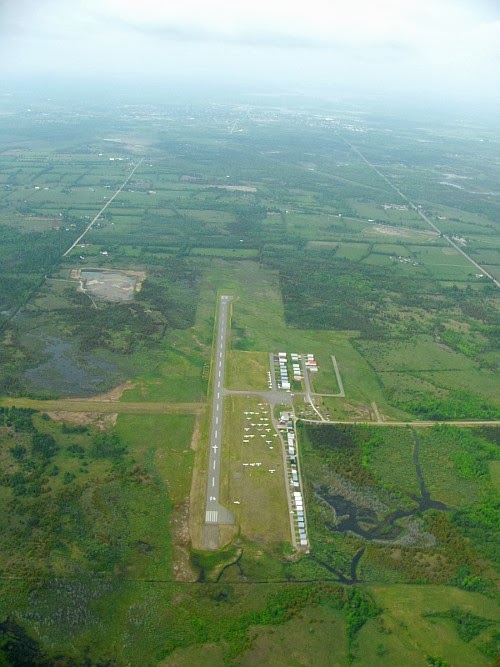
Ottawa’s Macdonald Cartier Int’l Airport NOISE

cyow

I represent private flyers on CYOW’s Noise Management Committee. The Committee was to have had a meeting today to summarize Noise complaints from 2013 and to outline how the resurfacing of runway 14-32 will impact noise this summer.

With only runways 07-25 and 04-22 active from May until September one would expect communities east or west of the airport to show some interest in how they might be impacted and what measures the Airport and flyers will take to mitigate potential noise on them. Well I am wrong! In fact, none of the community representatives indicated they wanted to attend the meeting and it was cancelled. (Only the airport authority, COPA Flight 8 and Nav Canada indicated they would attend the meeting.)

Aircraft movements dropped to 125,269 over 2013. That’s down from a high of 134,632 in 2011. In 2013 for every 1000 movements there were .61 complaints. The complaints per 1000 movements has ranged from a low of .42 in 2009 to a high of .61 in 2011 and 2013 with an average of .52 per 1000 movements.

Surprisingly, Cessna as a type generate more complaints than most other airliners, military airplanes and helicopters. The airport reports they had 76 complaints in 2013. There were 24 complaints about Cessnas in 2013 versus 8 for B737, 5 for B767, 1 for Airbus. Most complaints come from the South-West (17), North- West (27) and North-East (21) of the airport. All Cessnas are grouped together so one does not know if we are talking about Citations or C150s, but I suspect the Cessnas  are predominately C150s and C172s used in flight training. As in the past it is light aircraft doing circuits and transiting to the practice area that stimulate many complaints. It is my understanding that the airport and the flight training operators have agreed to flight paths that mitigate noise complaints but it appears the pilots are not getting the message. Are we our own worst enemies?

It is expected that Runway 14-32 will be closed from mid-May to late-September. This will clearly concentrate aircraft movements on flight paths associated with runway 07-25 and potentially increase noise on its approach and departure paths, and on downwind and base legs over Manotick, Orleans and Barrhaven. Surprisingly these communities felt no need to attend the noise meeting. The Airport Authority is doing its best to be a good neighbour. One must wonder about how its neighbours are reacting?

The Airport Authority will advise local media and city politicians when the runway will close. When they resurfaced 07-25 in 2012 the change in flight patterns immediately stimulated more noise complaints. This seems likely this time too.

I am confident we Private flyers will do our part mitigate our noise impacts on our neighbours, friends and families.

Don’t hesitate to comment on any postings on this blog.

18 February 2014

GPS Jamming Simulation exercise in Petawawa 6 March 2014

By Marcel Pinon, Manager, Level of Service and Aeronautical Studies, Nav Canada

It has just come to my attention that DND is planning to conduct a low power GPS jamming exercise at Petawawa, ON 6 March 2014.

A NOTAM will be issued that GNSS navigation might be affected on March 6, 2014, between 0900-1600 EDT (1300-2000 UTC).

The terrain will definitely play a role to the extent of the affected, we assume that the intermittent loss of signal may be experienced within the entire cylinder centered at N45°59'4.8” W77°20'40” with a radius of 25 NM up to 39,000 ft. AGL.

12 February 2014

Stick A Fork In It - The Cessna 162 Skycatcher is Done

The news came this week that the Cessna will not sell any more model 162 Skycatchers. The 162's official webpage was taken down. The 80 unsold aircraft in inventory will be held for parts for the existing fleet, which currently stands at 275 aircraft. That tally includes the 80, meaning that there are 195 in the flying fleet.

After the most recent news the demise of the 162 was no surprise. In fact, for people who followed the story from the start, most will wonder how the aircraft stayed in production for as long as it did, from December 2009 to December 2013.

The 162 had a tortured development from the start. Its design phase saw the Rotax 912ULS engine that would have ensured a good payload replaced with the Continental O-200D, which put it over weight and gave it higher fuel consumption. The aircraft not only lacked full-fuel payload, but it lacked the ability to carry taller pilots and people who could easily get into a Cessna 150 couldn't fit in the diminutive 162 cockpit. The cockpit actually has room for the seats to be moved back, they just didn't do it, presumably for C of G reasons. There were two prototype crashes, both during spin testing that required design changes, some of the changes involved post-production modifications to the early production examples. Then there was the highly unpopular decision to have the aircraft built in China with final assembly in Kansas.

The initial price was supposed to be under US$100,000, but it quickly rose to its final mark of US$149,000. Cessna has not said, but my guess is, with all the trans-Pacific freight and two assembly lines to produce each aircraft, that they were still losing money on each one built. Why else quit making them? It is amazing that companies like Zenair can build and sell a comparable aircraft, the Zenair 650 LSA, for US$129,900 and presumably make money doing it. Big companies with tons of experience building and selling aircraft, like Cessna, should be able to do it more efficiently and for less. They had 1,200 orders for this plane, after all and that has to produce some economies of scale. Companies like Zenair are essentially building to order on an individual basis, but then perhaps "cottage industry" scale is the cheapest way to build small planes.

Then there was the much maligned choice of names, Skycatcher, sometimes written as "SkyCatcher". The choice of the marketing department, it did sound like it would fly formation with famous Cessna names like Skyhawk, Skylane and Skywagon, but it didn't. It started out snickeringly as "Skysnatcher" (or worse) and then, after the first two prototype accidents, as "Skycrasher". Perhaps they should have held a competition and let the buyers choose a name for it?

There were so many missteps in the short history of this little aircraft it is hard to believe that the development was carried out by the company that has produced more light aircraft than any other company in history.

Ironically I hope Cessna decides to sell the rights to the 162, because I think if the price was right that someone would actually buy it. I think with a bit of redesign work to lighten the airframe up, fit a lighter and more efficient engine, like the new Rotax 912 iS with its direct fuel injection and electronic engine management unit, which would allow carrying less fuel and more people for the same speed and range, as well as fix the ergonomics, you could have a real winner in a 162B model. Just name it something better, like "Sparrowhawk".

External links

11 February 2014

Moe's Fly-in 2014!

Moe's Fly-in on the Ottawa River is coming up soon!

Here are the details:

  • Date: Saturday 22 February 2014
  • Time: Starts at 1000 hrs and runs all day
  • Location: on the Quebec side of the Ottawa River, 1 mile west of the Ottawa VOR.
  • Coordinates: 45°26'57" N, 75°55'48
  • Runway: Runways 34 & 16, 3500' x l00'
  • Frequencies: ground 122.75 MHz, air 123.20 MHz.
  • Notes: Ski landing recommended. Weather permitting, a runway will be ploughed, "landing is at your own risk."
  • Information: Maurice Prudhomme 819-682-5273

06 February 2014

Amendments to Aeronautics Act, Regulations - Requirement to Consult on Aerodrome construction

by Kevin Psutka
President and CEO, Canadian Owners And Pilots Association

I attended a conference yesterday at which Transport Canada (TC) officials explained their rationale for wanting to proceed with amending the Aeronautics Act and regulations to require consultation on all aerodrome creation and construction. There were many representatives of Associations plus other individuals who attended by telephone and TC reported that 15 written responses were received. I would like to thank everyone for taking the time to make your concerns known. I believe we got TC's attention to the enormity of this issue because by the end of the meeting TC agreed to review the way forward.

Industry representatives did a great job of highlighting the need for a focus group to thoroughly investigate the implications of this issue but we need to drive this point home as TC considers the way forward. TC said that "only" 15 responses have been received and they want more input. I realize that many of the submissions were from organizations that represent thousands of people but TC views 15 responses as relatively low.

TC has extended the comment period until 14 February to provide comment and I ask everyone to fan this message out to your contacts and encourage them to review my article on the subject and then provide input to CARRAC@tc.gc.ca before 14 February 2014.

TC admitted yesterday that the collective discussion that the conference had value and brought some points forward that they had not seen or missed in the written submissions. Now is the time to drive the point home that a focus group is needed. Please fan this message out to your contacts and if you have not yet provided comments, please do so.

05 February 2014

Eastern Ontario Pilots Association Seek Past Bonspiel Participants

Hebb Russell of the Eastern Ontario Pilots Assoc (EOPA) is trying to contact all previous participants in their charity curling bonspiel.

Due to people changing their email addresses the association has lost contact with many past particiapnts, so if you curled with them before and haven't had an invitation to this year's bonspeil then please write to Hebb at eopa.email@gmail.com to be added to their email list.

02 February 2014

Kars 10th Annual Ski Fly-in Coming Up!

The Kars Winter Ski Fly-in is coming up soon! The event is organized by RAA Ottawa-Rideau Chapter 4928.

Chapter president Victor Thompson notes: "The Winter Ski Fly-in as usual will be a pot luck affair and the group will be accepting donations for the meal. The Kars Air Park is not plowed but aircraft equipped with skis in the past have landed and all have had a great time. Hoping for mild weather and blue skies!"

Details

  • Event: Kars RAA Chapter 4928 10th Annual Ski Fly-In
  • Date: 01 March 2014
  • Time: Lunch served 1100-1400 hrs at the clubhouse
  • Location: Kars Rideau Valley Airpark (CPL3), 45°06′N 075°38′, RWY 26/08
  • Comunications: 123.4 MHz
  • Who: The public is welcome
  • Driving directions: Dilworth Road just east of Hwy 416
  • More information: email Larry Rowan
  • To check on field conditions 24 hours prior Call Larry Rowan at 613-489-2332

31 January 2014

Last Flight - Ruth Merkis-Hunt

by Adam Hunt

Pilot, flight instructor and COPA Flight 8 Ottawa member Ruth Merkis-Hunt died of cancer on 30 January 2014 at age 49.

While she trained dozens of students to licence standard, Ruth will probably best remembered for her tireless contributions as a COPA volunteer during the years I worked there, 2000-07. She manned COPA trade show booths, sold COPA Collection clothing at COPA conventions, edited all the COPA Guides and hundreds of articles published in COPA Flight and flew with me to many fly-ins and meetings, happily conversing with members in English and French equally well.

Ruth's favourite aircraft type was the Cessna 172, which she flew for most of her teaching career, but her small size and light weight meant she was often relegated to a Cessna 152 with a heavier student. She had a lot of affection for the military C-130 Hercules freighter and flew on them several times as a SAR spotter.

We owned four aircraft together, including one we built and two we restored, but by 2006 Ruth's multiple sclerosis had resulted in persistent vertigo that made flying unpleasant for her. She kept her interest in aviation, though, working quietly behind the scenes, editing hundreds of aviation articles for publication, attending Flight 8 meetings, airshows and fly-ins whenever her health allowed.

Ruth's cheerful and kind nature won her many friends throughout the aviation world, as in all the other facets of her life. She was keen on so many things, like aviation, astronomy, bread baking, Buddhism, crochet, cross country skiing, cycling, camping, hiking, Linux, meteorology and music. She made friends through all her interests. She will be sorely missed by many people, especially by me, as we were inseparable partners in everything for over 17 years.

In lieu of flowers or other gifts, donations can be made to Ruth's favourite charity, Sati Saraniya Buddhist Hermitage, to allow them to carry on their valuable teaching work.

External links

15 January 2014

Fisher Flying Products For Sale

January 15, 2014

Press release by Paul Riedlinger, President of Fisher Flying Products

I have decided now is the time to make some major changes at Fisher Flying Products. Effective immediately, we will no longer be selling kits for any of our aircraft to new customers. We will only be offering our excellent full-size plans to people who want to scratch build any of our 14 different aircraft. Full technical support will continue to be offered. In addition, we will be continuing to sell items that are unique to our aircraft such as fuel tanks, cowls, windscreens, etc.

If you are an existing customer, replacement parts and kits needed to complete your aircraft will continue to be available. The changes only affects new customers. I do ask that you place any orders for kits needed by 15 March 2014.

These changes will remain in effect until I can find a buyer for the company who can restart production and carry Fisher forward into the future.

Details Of The Decision

For those of you who know me, you will realize this is not an easy decision. I took over FFP from Gene and Darlene Hanson five years ago and have had the time of my life reviving the company and making these great airplanes available once again. I have made many good friends and look forward to coming into work each day and talking with our great customers. I love dealing with our customer base which is truly world-wide.

So, why the change? Well, it certainly is not because the company is in any type of trouble. In fact we grew 40% in sales last year, invested in new modern production equipment and employed some of highly skilled people. With the US market finally coming back, the future sales potential for the company is very promising. It all comes down to time and being able to treating our customers with the level of service they have come to expect and deserve. What many people do not realize is that I took on Fisher because of my love of aviation and the desire to keep the FFP designs from disappearing. Besides running Fisher, I also own another business, guest lecture at the University of Toronto and I am in the process of getting my Doctorate at Reading University in England. I have always prided myself on providing excellent service and support for Fisher's products and recently it has become clear to me that with everything else going on I simply do not have the time to dedicate to FFP that it deserves. My goal with the changes is to allow me to provide support and products to existing customers while I search for a new owner for the company. I do not want to see anyone left stranded without the parts needed to complete their aircraft.

With all of this in mind, I would also like to announce that the company is for sale. With 14 different designs, a huge worldwide customer base of over 4000 people it is a great opportunity for someone who is looking to immerse themselves in the aviation world. What is for sale is all of the designs, production jigs, engineering, copyrights, etc. If you are interested in finding out more please feel free to contact me.

A quick summary of the changes:

  • New Customers will only be able to buy plans and supporting products
  • Existing Customers - nothing really changes other than if you need kits to complete your aircraft, please place the order before 15 March 2014
  • Technical Support - still available. It is always best to use email for technical support. Provide a detailed description of your question with part numbers and/or plan number you have questions about. Photos are always very helpful. If you want to talk on the phone about an issue, please note that phone support will be available Tuesday and Thursday from 9am-5pm Eastern Standard Time
  • Website - over the next few days you will notice see that the long promised online store will be turned on so you can do most purchases directly from our website
  • If you are interested in buying the company please contact me at for more details

I know that the changes are going to make some people unhappy but I hope you understand why I need to make them. It has been a pleasure dealing with each of you for the past 5 years and I look forward to continuing to support the Fisher line of aircraft. If you have any questions, please feel free to contact me by email.

Contact information

External links

Further to: Does ForeFlight miss…info

ForeFlight has been great dealing with me. Since my queries and comments yesterday I have received several emails and a phone call. Great service ForeFlight Team!

Below is  ForeFlight’s annotated responses to my queries yesterday (the one with red notes). Note departure procedures, called SIDs in Canada, are under Procedures not Taxiways. There are no SIDs under taxiways in ForeFlight. Also note a Taxi Chart under ForeFlight’s Ottawa Procedures? I included the ForeFlight’s Buffalo Procedures screen and ask you to note the Takeoff Minimums item there listed. As well I included Ottawa’s Taxi Chart from ForeFlight’s Procedures for Ottawa. (Raises the question why Nav Canada shows the Aerodrome Chart and not the Taxi Chart in its list of Aerodrome Diagrams on its webpage?)

IMG_3253-17Buffalo procedurescyow taxi chart

OK, I looked in the wrong spot for takeoff minimums at Canadian airports. But I did so using the same logic ForeFlight applies to takeoff minimums for airports in the USA, specifically they are under Procedures!

My preference would be to start from some objectives like:

  1. Keep IFR procedural information in one place, e.g., Procedures.
  2. Keep ground movement information in one place, e.g., Taxiways or Taxi Diagrams.

With these objectives in mind, below is what I would expect to see:

  1. Procedures would include Arrival, Approach, Departure, Takeoff procedures and Noise Abatement, deicing.
  2. Taxiways or Taxi Diagrams would include taxi charts, parking/gate locations, hot spots, and other ground movement information as appropriate. Perhaps deicing too.

I find it interesting that Nav Canada publishes Taxi Charts for some airports, e.g., Ottawa CYOW and ForeFlight shows these under procedures, but not Taxiways or Taxi Diagrams. For many Canadian airports there is only one chart that shows both takeoff minima and taxiways. I believe ForeFlight should show these charts in both Taxiways and Procedures. A little repetition will not hurt.

Speaking or repetition, ForeFlight repeats all approach plates under Runways and Procedures. That is probably useful and intuitive for some pilots, but I wonder if this increases memory requirements and download time?

My goal is simply to point out how one Canadian Pilot misunderstood the logic behind ForeFlight, with the thought that other pilots might make the same mistakes and not find that for which they are looking.

14 January 2014

Does ForeFlight miss Canadian info?

CYVR proceduresCYVR airport chart from Nav Canada


Is your ForeFlight Mobile missing some key Canadian Charts? You will note in the above screen capture from my iPhone 5 that no Aerodrome Chart is listed for Vancouver International Airport CYVR. This could be unhealthy for Instrument pilots departing Vancouver since they will be missing the Takeoff minima that is on the bottom left of Nav Canada’s Aerdrome Chart for Vancouver (also shown above). Takeoff minima climb gradients in Canada is adjusted to reflect obstacles (mountains) in the departure path. Without the noted chart in ForeFlight we may be exposed to this potential risk.

For Ottawa CYOW ForeFlight provides the French Carte d’Aérodrome which does include Takeoff Minima, but only in French. I don’t think I have miss-checked a feature in the Download section of ForeFlight, but that is a possibility I am exploring that with the ForeFlight Team.

Still ForeFlight is a great aid and I would hate to loose it.

13 January 2014

New Name For European Aircraft Manufacturer

A number of European aerospace manufacturers changed their names on 2 January 2014. These companies, all part of EADS, now have easier names to remember, but it does mean some aircraft types will have new names

Here is a summary of the changes:

  • The parent company, EADS, is now Airbus Group
  • Airbus Military, Astrium and Cassidian are now Airbus Defence and Space
  • Eurocopter, the helicopter manufacturer, is now Airbus Helicopters
  • Airbus, the airliner manufacturer, remains as Airbus

This does mean that some current production aircraft, such as the Eurocopter EC135, will become the Airbus EC135, etc.

The company has indicated that existing company documents, such as technical publications, press releases, financial statements and so on will not be re-branded. New documents will bear the Airbus name.

External Links

11 January 2014

Ottawa Flying Club Seeks Photos

From Ottawa Flying Club

Board Director Ryan Lloyd is working on the Ottawa Flying Club's new website and has put out a call for pictures of OFC aircraft, the club house and from OFC trips that we can use on the website. He has the back end on the new site all set up now but he doesn't have enough high quality club photos.

He is looking for shots of the different club aircraft and shots of the club as well.

Please send your best photos and videos as well. In your email state that it is OK for the OFC to use the photos and how you would want your shots to be recognized or attributed.

Email your photos and videos to photos@ofc.ca

10 January 2014

Murphy Aircraft For Sale

Press Release - 09 January 2014

Murphy Aircraft Manufacturing Ltd. announced today that the company is now being offered for sale, to someone who can take the company to the next stage of development.

Mr. Darryl Murphy, Company Founder and President, said "After thirty enjoyable years running Murphy Aircraft Mfg. Ltd., I am approaching retirement, with the desire to spend more time with family and pursue other interests. To that end I find myself in the position of wanting to sell Murphy Aircraft Mfg. Ltd."

Murphy Aircraft Mfg. Ltd. was founded in 1985 and has been a world leader in the design and production of experimental light aircraft, having sold close to 2,000 aircraft kits in over 35 countries. Many of these Murphy aircraft are now flying on floats and skis. The Murphy Moose and Murphy Rebel, with their reputation as rugged, roomy bush aircraft, offering utilitarian high useful loads, are especially coveted for their excellent performance on floats.

Mr. Murphy continued “With strong signs of economic recovery in North America, the time is right for someone else to take over.” This presents a great opportunity, as the cost of designing, tooling, building and testing a new line of aircraft would greatly exceed the asking price. The package includes all 8 aircraft models and 3 sizes of straight & amphibious floats, existing inventory, and quick-build jigs for the Renegade and Moose. The selling price will be in the $2.5 to $4 million range, depending on how much of the manufacturing machinery the buyer wants. A tailored training program can be provided. Murphy Aircraft Mfg. Ltd. will continue to supply new kits and service parts throughout the change-over to new ownership and anticipated expansion.

Patterson AeroSales, who handle all Murphy kit sales and marketing, will continue to accept and process orders for delivery positions now and throughout the expected year-long transition to new ownership.

Anyone interested in acquiring Murphy Aircraft Mfg. Ltd., should contact Mr. Darryl Murphy by email

Background

Murphy Aircraft Mfg. Ltd. is one of the oldest and largest aircraft kit manufacturers in Canada. The Murphy lineup includes the popular Renegade, Rebel, Rebel Sport, Elite, Maverick, Yukon, and Moose kits, as well as 1500, 1800 and 3500 straight & amphib floats. All can be viewed on the Murphy web site.

Contact

  • Murphy Aircraft Mfg. Ltd., #2-8155 Aitken Road, Chilliwack BC V2R 4H5 Canada
  • 604-792-5855
  • Email
  • Web site

External Links

08 January 2014

Lecture on the First Human Powered Helicopter

Carleton University's American Helicopter Society (AHS) team are hosting its first AHS event right here on campus! The event will focus on a presentation by the AeroVelo team, who were the first to create a human powered helicopter and get it off the ground. The project was part of the Igor I. Sikorsky Human Powered Helicopter (HPH) Competition.

With no designs being successful during the 33 long years of this competition, AeroVelo was able to achieve and exceed the requirements set by the competition committee which included a one minute hovering time, while keeping a steady altitude of 3 meters to win the $250,000 prize.

Details

  • Date: January 9, 2014
  • Location: Porter Hall (University Centre, 2nd floor) Carleton University
  • Time:
    • 6-7 Registration/Social
    • 7 pm Presentation
  • Cost:
    • AHS Members: Free
    • Non-AHS members: $10
    • Students and Faculty: $5 with RSVP
  • Food: Snacks and refreshments provided
  • RSVP to Jen Gatenby

External links

07 January 2014

Fly-in Resturant Now at Oshawa Airport

by John A., COPA Flight 70 Oshawa Chief Gourmet

Mak's Pulled Pork Sandwiches And More has moved from 106 Byron Street South, Whitby, Ontario to the Oshawa Air Terminal.

Have a heaping pile of juicy, mouth-watering pulled pork or pulled jerk pork shavings on a bun, generously drizzled with your choice of Mak's BBQ sauce, or Mak's Heat BBQ sauce, if you want that tangy kick in every bite!

Extra hungry? (I was yesterday & again today) The Mak's Monster also adds a towering combination of coleslaw and cheese.

For non-pork-lovers there is also chicken club wraps and butter chicken. Also there is a traditional breakfast menu, lunch sandwiches and snacks, too.

  • Mak's Monster $8.99
  • Mak's Jerk $7.25
  • Mak's Pulled $6.50
  • Buttered chicken $5.99

Carla and Mark welcome you Monday to Friday, 0830-1430 hrs

01 January 2014

Canadian Private Fleet Shows Continued Slow Growth For 2013

The Canadian private civil aircraft fleet continued to grow in 2013, but at a rate that was once again the lowest seen since 2003, lower than in 2012 and worse than at any time during the recession of 2008-10.

In 2008 the fleet grew at a very fast rate of 3.2%, in 2009 by 2.2% reflecting the recession, in 2010 increased to 2.3% and in 2011 up to 2.5%. In 2012 it was down to just 1.96% and now 1.92% in 2013.

The numbers seem to indicate that recession is still very much with us and that the ongoing poor state of the Canadian economy is affecting aircraft buying. As in recent years, the fact that the fleet has continued to grow and not shrink is probably due to the persistently high asking prices for used aircraft in Canada, as the US economy and its dollar remained relatively weak through 2013. Towards the end of 2013 the Canadian dollar fell about 6% against the US dollar, but this still left aircraft asking prices higher than they should be compared to the US market. This has encouraged cross-border aircraft shopping and driven up the overall number of aircraft registered in Canada. As I have noted in years past, the main problem remains that many of those for-sale-but-over-priced-aircraft are also not being flown much, so while the Canadian civil fleet grows in size, the amount of flying probably isn't increasing and may in fact be decreasing.

In 2013 the total Canadian civil fleet increased in size by 538, compared to 593 for 2012. In 2013 the private segment of the fleet accounted for all the growth seen, increasing by 542, while the commercial aircraft fleet increased by only two aircraft and the state fleet, those aircraft owned by the various levels of government in Canada, shrunk by six aircraft. While private aviation is growing slowly, state and commercial aviation were both stagnant in 2013.

Certified Aircraft

Certified aircraft have been leading the growth in private aircraft for a number of years. They lost that lead to basic ultralights in 2012, but regained it in 2013. The comparatively low US dollar combined with high asking prices for aircraft in Canada makes US imports cheaper than buying domestically. The numbers increased in 2013 with 187 certified aircraft added, up from 2012's total of 172. In 2013 the new additions to the certified fleet were made up of 133 airplanes, 11 balloons and 44 helicopters, while the number of gliders was reduced by one.

Certified aircraft accounted for 35% of the private fleet growth in 2013. There were 16,293 private certified aircraft at the end of 2013, out of a total of 28,813 private aircraft registered.

Basic Ultralights

BULAs were once again the second quickest growing area of private aviation in 2013, after certified aircraft, after being in the number one spot in 2012. In 2013 the category increased by 153 aircraft and accounted for 28% of the private fleet growth. There were 5,780 BULAs registered at the end of 2013.

Amateur-builts

Amateur-built aircraft were in the number three slot again in 2013, increasing by 90, down from an increase of 98 in 2012. In 2013 the aircraft added were made up of 90 airplanes and two balloons, while the number of helicopters and gyroplanes decreased by one each. Amateur-builts made up 17% of the aircraft added to the private fleet in 2013.

Amateur builts now number 4,069 in Canada and include a wide variety of aircraft, from fixed wing airplanes, helicopters, gliders, gyroplanes to balloons, airships and even one ornithopter.

Owner Maintained

The O-M category added 22 aircraft in 2013, down from the 37 added in 2012, leaving the category in fourth spot once again ahead of advanced ultralights. By the end of 2013, there were 605 O-M aircraft on the registry, made up of 591 airplanes and 14 gliders. O-M aircraft made up 4% of the aircraft added to the private fleet in 2013.

This category has continued to suffer from low numbers of aircraft being moved from the certified category ever since the American FAA announced that O-M aircraft will never be allowed to fly in US airspace or sold in the USA. Overall this category continues to stagger along with very minimal interest from owners.

Advanced Ultralights

Advanced Ultralights remained in fifth place for growth in 2013, increasing their numbers by only 17 airplanes, compared to an increase of 27 in 2012. Their growth in numbers in 2013 made up 3% of the private fleet increase and brought the total number of AULAs on the civil register to 1,193. By the category definition, all AULAs are powered, fixed wing aircraft.

The AULA category was introduced in 1991 and therefore 2013 was its 22nd year. The category has increased its numbers at an average of 54 aircraft per year and so can hardly be considered the success that was anticipated when it was started. As in the past five years, the number of AULAs added in 2013 was well below the average from the category's earlier years. This seems to indicate that the category is slowly dying out, a trend mostly likely linked to the high price of new AULAs and their American counter-parts, Light-Sport Aircraft.

Commercial Fleet

In 2013 the commercial aircraft fleet increased by just two aircraft to bring it to 7,013. The numbers show an increase of five airplanes and no helicopters, offset by a decrease of three balloons. The biggest commercial fleet growth was in three-engined aircraft, with four added, while twins shrunk by 76 aircraft.

In round numbers, at the end of 2013 the private fleet made up 80% of the aircraft in Canada, with the commercial fleet at 19% and the state fleet at 0.7%. As commercial aviation fails to grow over time private aviation is making up a greater proportion of the fleet.

Imports & Exports

Aircraft imports into Canada in 2013 numbered 669, which was down from 753 in 2012 and well below the 968 imported during the pre-recession days of 2008. In 2013, 770 aircraft were exported, giving a difference of 101 favouring exported aircraft over those imported.

Looking at 2013

World oil prices ended 2013 at US$100.32 for North America (WTI) and US$112.18 for Europe (Brent). These were up slightly, $10 and $2 respectively, from a year ago, showing the careful balance between poor economic conditions reducing oil demand and associated prices and economic recovery increasing demand and prices. Poor economic conditions result in less flying because people have less money, but with world oil production stagnant now for nine years, economic growth increases demand for this limited resource and results in higher oil prices and the inevitable reduction in flying hours. Aviation data from 2013 once again indicate that high fuel prices are restricting private flying.

Note: Data for this report was taken from the Transport Canada Civil Aircraft Register and reflects the difference between the number of aircraft registered in Canada on 31 December 2012 and 31 December 2013. These statistics reflect the net number of aircraft built and imported, minus the number destroyed, scrapped and exported. Just because an aircraft is registered in Canada does not mean it is being flown and therefore the number of registered aircraft should not be confused with the amount of flying activity.

29 December 2013

ASAP Moves to the USA

It appears that long time Canadian kitplane manufacturer Aircraft Sales And Parts (ASAP) has been sold and the company is being moved to Sealy, Texas.

ASAP was founded by Brent Holomis in 1988 as a parts supplier for the then discontinued Spectrum Beaver and Birdman Chinook ultralights. Over time Holomis went far beyond parts though, redesigning both those aircraft as the ASAP Beaver RX550 Plus and the ASAP Chinook Plus 2 and adding new aircraft to the line, like the single seat Beaver SS. His business expanded into making propellers, powered parachutes and their canopies as well, spinning those off to separate companies, GSC Propellers, as well as Summit Powered Parachutes, Steel Breeze Powered Parachutes and ASAP Canopies.

It seems that after 25 years of being located in Vernon, British Columbia, the company is now in the process of being packed up by its new owners, John and Kim Couch, and moved south to Texas and will be located at Gloster Aerodrome (1XA7) in Sealy, Texas.

The relocated company is expected to be open to accept orders early in 2014, under a new name, the Aeroplane Manufactory.

External links

27 December 2013

Beechcraft Sold!

On Boxing Day, 26 December 2013, Beechcraft was sold for about US$1.4B in cash.

The sale really wasn't much of a surprise as the company had been through a complete turn around and emerged from bankruptcy ready for sale. What was a surprise was that it wasn't bought by Chinese or Middle Eastern interests, but by Textron, an American company that also owns Cessna and Bell Helicopters.

The purchase had been rumoured a week or two ago by multiple news outlets but neither Textron nor Beechcraft confirmed it until Boxing Day.

The news is very good, as, not only will Textron keep building King Airs, which fit nicely into the niche left when Cessna stopped building multi-engined turboprops, but the Hawker Beechcraft 4000 and Premier 1A jets, which Beech had tried to sell off separately, will also be supported. It seems unlikely that they will build more Hawker Beechcraft 4000 and Premier 1A aircraft, but the existing fleet will be kept flying as Textron bought the type certificates.

The question of what will happen to the Bonanza and Baron piston-powered aircraft lines is unanswered at this point in time, but neither aircraft has a competitor in Cessna's current offerings, so their production may continue as well. I expect there will be more news on this in the early part of 2014, so as not to inhibit potential sales.

Here is my current list of western aerospace firms bought out so far by non-western interests. Note that Beechcraft isn't on the list!

  • Cirrus Aircraft - Government of the Peoples Republic of China
  • Continental Engines - Government of the Peoples Republic of China
  • Enstrom Helicopter Corporation - Chongqing Helicopter Investment Co, China
  • Epic Aircraft - Engineering LLC, Russia
  • Flightstar Sportplanes - rights, tooling and parts inventory purchased by Yuneec International, China
  • Glasair Aircraft - Jilin Hanxing Group, China
  • International Lease Finance Corp - 90% New China Trust Co Ltd, New China Life Insurance Co Ltd, P3 Investments Ltd and China Aviation Industrial Fund
  • Liberty Aerospace - 75% owned by the Kuwait Finance House, a wholly owned subsidiary of Kuwait Finance House of Bahrain
  • LISA Airplanes - 75% owned by Heima Mining Company, China
  • Mooney Aviation Company - Soaring American Corp, backed by Chinese investors
  • Piper Aircraft - Government of Brunei
  • Superior Air Parts - Weifang Tianxiang Technology Group, China
  • Thielert Aircraft Engines - Government of the Peoples Republic of China

External links

30 December 2013 Update

Textron CEO Scott Donnelly indicated that Beechcraft and Cessna would be combined to form a new light aircraft manufacturing concern that will result in US$65M-$85M in annual savings over keeping the companies separate.

14 December 2013

Ottawa Flying Club Christmas News

From the Ottawa Flying Club

The Ottawa Flying Club is very pleased to announce the acquisition of a Private Career College certification from the Ontario Government, allowing the OFC to offer Commercial pilot training and Instructor Ratings to our Members.

And Santa, who obtained his Private Pilot's Licence at the OFC years ago, has let slip that the brand new Redbird Flight Simulator, the cutting edge dual-yoke advanced training platform at the OFC, will be installed in our new Instrument Flight Centre of Excellence building just after Santa returns this December 25th!

Lots of excitement at the OFC this holiday season.

External links

10 December 2013

Electronic Canada Flight Supplement For Late in 2014

Nav Canada's recent Fall 2013 edition of their TechWatch publication has given an implementation date for finally achieving an electronic version of the Canada Flight Supplement. The company indicates this should happen about a year from now, in late 2014.

Nav Canada says:

The NAV CANADA Online Store went operational in early 2011 enabling customers to either order or download a range of NAV CANADA aeronautical publications online.

With 7,000 active customer accounts, NAV CANADA has seen steady demand for its publications over the web. More recently, with the added option of downloading some of its key publications in PDF format, the company is anticipating significant growth in the number of customers taking advantage of this service.

Customer Benefits:

Shifting to an authorized electronic format allows customers to print only the sections or pages of a publication that they need and access information through authorized portable devices. By providing immediate access to downloadable aeronautical publications, pilots planning their flights can obtain the most up-to-date information in a timely manner. Moreover, the publications are made available a full 10 days prior to their effective date.

Downloaded products are priced 20 per cent less than their paper equivalents. Customers also save on shipping and handling. Also available at the Online Store, at no additional charge, are the Canada Air Pilot General pages and a Change Page that allows customers to quickly identify all the aeronautical changes made from one publication cycle to the next.

Status Update:
  • Available for download are all seven volumes of the Canada Air Pilot (CAP), the Restricted Canada Air Pilot (RCAP) and the Water Aerodrome Supplement (WAS). Customers can purchase these products and then print their required pages. These products are official aeronautical publications and suitable for air navigation purposes.
  • NAV CANADA is currently working towards the availability of an electronic version of the Canada Flight Supplement with a release targeted for late 2014.

External links

06 December 2013

Cessna CEO: Skycatcher Has "no future"

I don't think this will surprise anyone: Cessna 162 production is about to be ended.

In October 2013 at the National Business Aviation Association convention Cessna CEO Cessna CEO Scott Ernest stated that the Skycatcher had "no future".

In my review of the Cessna 162 in November 2010 I noted that while the design did have some pluses, like the control stick, fit and finish and the doors there were many problems with the design, particularly:

  • The name "Skycatcher", which no one reacted well to.
  • The cockpit ergonomics, being unable to accommodate anyone over about 6'1".
  • Poor payload, which was 304 lbs of people and baggage on the one typical production aircraft I evaluated.

At one time the company had claimed that they had 1200 orders, which would have made the aircraft by far the most numerous LSA built, if they had all been delivered. But the initial target price of "under US$100,000" was not met and the price quickly increased to US$149,000, far above the price of its competition. The price increases contractually allowed production position holders to cancel and Paul Bertorelli of AVweb reports that "it gave position holders an opportunity to bail, and they did. In droves." So apparently orders are well down and dealers have aircraft they they can't sell.

At last count the FAA register shows 275 Cessna 162s in the USA, while Transport Canada shows none registered here.

Bertorelli lays the blame for the demise of the 162 on its high price, lack of performance and poor useful load compared to its competitors and he is probably right there.

The 162 had a troubled development history, with two prototype crashes, both during spin testing, resulting in some design changes. There were also wing modifications after the aircraft entered service, all at Cessna's expense, too.

Then there was the decision to have the aircraft built in China, which riled a lot of feathers in the aviation world. In the end the aircraft were built at Shenyang Aircraft, boxed up and shipped to Wichita, Kansas where they were assembled, had engines and avionics fitted, modified and then test flown by contractor Yingling Aviation (later moved to Cessna's Independence Kansas plant). With the cost of shipping that could only have contributed to the high costs involved.

Personally I think the design met its Waterloo when the prototype had its Rotax 912 engine replaced by the much heavier Continental O-200, at flight school operator insistence. That compromised the payload of the aircraft and left it as a de facto single seater.

In the final assessment it looks like even the famous Cessna name wasn't enough to overcome the shortcomings of this design and its price. The market has decided its fate.

External links

05 December 2013

Robert Kostecka To Present A380 Seminar at Rockcliffe

From Rockcliffe Flying Club

On Thursday, 12 December 2013 at 1830 hours, RFC members will have an opportunity to learn about the A380, from a fellow RFC member who flew this remarkable aircraft!

Rob Kostecka was a member of the international team of pilots that participated in the Operational Evaluation (OE) of the A380 in 2007. Rob will be discussing the many technical innovations of this remarkable aircraft and will also be talking about what this enormous aircraft was actually like to fly!

The talk will begin at 1830 hrs on Thursday, 12 December 2013. It will be free for all RFC members and their guests. Please let Brenda Reid know via email if you plan on joining us so we can provide space.

For those who would be interested, pizza will be available before the talk at 1745 hrs. For those who would also like to join us for pizza please let Brenda Reid know via email, so that she can place the order. Please note, if you are joining us for pizza, a $10 contribution will be requested.

The seminar is at RFC for now, but if a large number of people RSVP then it may be moved to the Bush Theatre at the Canada Aviation and Space Museum.

Mirabel Restrictions - November 2013 to May 2015

from Patrick Gilligan, COPA VP Operations

To allow for certification of the new CSeries aircraft, Bombardier Aerospace will carry out test flights within the Mirabel control zone, during which time some restrictions will be imposed in the control zone and the surrounding airspace at Mirabel airport.

Test flights will be carried out sporadically over spans of 1 to 3 days, during a 20-month period from November 2013 to May 2015. Restrictions during flight tests may affect Runways 06/24 and 11/29, the Mirabel control zone (excluding CYR 624), restricted area CYR601, and Class “E” transition areas located between 7 NM to 12 NM east and west of the Mirabel control zone (identified in green on sketch) and from 1,300 ft ASL to 2,000 ft ASL, depending on the type of test flight planned. A portion of uncontrolled airspace (Class G airspace), located west of the control zone and described below, will also be affected by restrictions

External links

03 December 2013

Planning Ahead For The 2014 Lancaster Airpark Fly-In

It is never too early to start planning for next year's fly-in season and Lancaster Airpark (CLA6), located just in between Cornwall, Ontario and Salaberry-de-Valleyfield Quebec is already planning for their 2014 ABC Fly-in!

In 2013 the Airpark ran its first ever "ABC Fly-in" focussing on Aeroncas, Champions and Bellancas and the event returns from 15-17 August 2014, so it is never to early to mark your calendars!

Organizer Brian Russell indicates that plans are yet to be completely finalized, but, as in 2013, if there is sufficient interest then provisions will be again made for floatplanes as well as wheeled aircraft.

As always all aircraft and visitors will be welcome. If you aren't flying an Aeronca, Champion or Bellanca then plan on coming to look at the ones that do fly-in.

External links

08 November 2013

2013 CAHS National Convention a Big Success

The 2013 CAHS National Convention & Annual General Meeting - "The Big Five O" - took place as scheduled between 11-15 September 2013 here in the Ottawa-Gatineau area.

The convention was a big success and CAHS member Gord McNulty has written up an article about the event and what was achieved.

It was great having this aviation convention here in the nation's capital. We hope that CAHS returns to hold it here again in the future.

01 November 2013

Can you get an Instrument Rating while making major errors flying ILS?

tsb 2013-11-01 14-16-24

It is sad that we lost two local pilots in late 2011 to an Instrument Landing System approach to Runway 07 at CYOW. We feel sorry for their families’ loss. To read the TSB’s accident report check:

http://www.tsb.gc.ca/eng/rapports-reports/aviation/2011/a11o0239/a11o0239.pdf

The TSB put a lot of blame on the pilots for making the decision to fly in bad weather, we pilots call it “get-home-itis”. Poor judgement was clearly a big part of the problem in this accident. Nonetheless I wonder how one keeps their instrument rating when they seem to make major errors flying an ILS on most of their IFR flight tests? If flying an ILS, generally considered the safest instrument approach, leads to major errors how would this pilot have done flying a non-precision NDB approach?

Questions going through my mind after reading the TSB accident report include:

  1. What role does flight training play in these kinds of accidents? Does the TSB consider flight training as a factor in any accident? Was it a factor here? It seems the pilot was weak on the basics of flying on instruments.
  2. What role does the IFR flight test play? If rated a pass 1.6 months earlier shouldn’t one still be current? Should a pilot be issued an Instrument rating if unable to fly an ILS without major errors in performance?
  3. What equipment was available to the pilot? Was there an autopilot, if so was it used? What type of instruments were available, e.g. HSI, geo-referenced GPS moving map, etc.?
  4. What coordination did the pilot and his pilot passenger establish before flying together? Did the non-flying pilot perform any duties, call outs, etc.? Should coordination be a topic for times when two pilots are flying together? Did the owners of the aircraft establish some form of Standard Operating Procedures?
  5. Should one need to fly in actual Instrument Meteorological Conditions (IMC) to get an IFR rating? Do simulators and hoods really make safe IFR pilots? At least during training should pilots log some time in IMC before taking the test?
  6. Would re-writing the INRAT exam in November really made any difference? What is the point of the TSB raising the question?
  7. Was the lack of currency at night a major factor?
  8. Perhaps the TSB does not need to examine these questions for a single accident, but it seems simplistic to ignore systemic influences in this accident.

Just for clarity, I am not an instrument rated nor am I flight instructor and therefore write with little authority on this topic.

08 October 2013

Meijing Group Buys Mooney Aviation

On 8 October 2013 the Mooney Aviation Company announced that they had been purchased by the Meijing Group of China, for an undisclosed sum.

The fact that Mooney had been looking for investors for a number of years is no surprise. The company had been struggling before the 2008-10 recession and then when it hit they were left with a fair inventory of unsold aircraft. On 5 November 2008 the company ceased production and laid off most of its workforce and the building of new Mooneys has not resumed since. The company has remained in business as a parts supplier to its existing fleet, but by January 2011 had only about ten employees left at work at the Kerrville, Texas plant.

The purchase by the Meijing Group, a Chinese real estate developer based in Zhengzhou, Henan Province, must come as a great relief for Mooney. Without this sort of buyout the company probably didn't have a future. The company is now planning a return to production of the M20 aircraft series.

For the Meijing Group this is a move to diversify the company and their first foray into the aerospace field.

Once again, though, it is apparent, as Mooney looked for a buyer for the past three years, that no one in North America or Europe was going to step in and buy the company. As has been the case often in recent years it has fallen to middle eastern and, more commonly, Chinese interests to buy up western aerospace manufacturers and keep them in business.

Here is my current list of western aerospace firms bought out so far by non-western interests:

  • Cirrus Aircraft - Government of the Peoples Republic of China
  • Continental Engines - Government of the Peoples Republic of China
  • Enstrom Helicopter Corporation - Chongqing Helicopter Investment Co, China
  • Epic Aircraft - Engineering LLC, Russia
  • Flightstar Sportplanes - rights, tooling and parts inventory purchased by Yuneec International, China
  • Glasair Aircraft - Jilin Hanxing Group, China
  • International Lease Finance Corp - 90% New China Trust Co Ltd, New China Life Insurance Co Ltd, P3 Investments Ltd and China Aviation Industrial Fund
  • Liberty Aerospace - 75% owned by the Kuwait Finance House, a wholly owned subsidiary of Kuwait Finance House of Bahrain
  • LISA Airplanes - 75% owned by Heima Mining Company, China
  • Mooney Aviation Company - Meijing Group, China
  • Piper Aircraft - Government of Brunei
  • Superior Air Parts - Weifang Tianxiang Technology Group, China
  • Thielert Aircraft Engines - Government of the Peoples Republic of China

External links

Update - 14 October 2013

According to the Wichita Eagle Mooney has received an investment from Soaring America Corporation which will allow it to restart production of the Acclaim Type S and the Ovation 2 and Ovation aircraft. It is unclear if Soaring America is related to the reported Meijing Group take-over or not as Soaring America President Cheng Yuan (Jerry Chen) indicated to Russ Niles of AVweb this week that he couldn't provide more information at this time.

Update - 21 October 2013

The details of Mooney's purchase are becoming a bit more clear as time goes by. According to AVweb Mooney has been purchased by Soaring American Corporation, a new company started in California last year with Cheng Yuan (Jerry Chen) from Taiwan as President and CEO. Chen, a PhD in aeronautical engineering, is now the new CEO of Mooney as well. It seems Chen represents a group of Chinese investors that may well include the Meijing Group, who have plans to restart Acclaim and the Ovation production and market the aircraft predominately to the Chinese market, which they feel is ripe for private aircraft and advanced trainers.

This video interview with Chen by AVweb outlines some of the ideas they are working towards:

See Also

07 October 2013

Ottawa Flying Club's 55th Annual Fly Day Was the Best Ever!

by Julie Marion and Marc Desjardins, Ottawa Flying Club Fly Day Event Coordinators

The fall season for the Ottawa Flying Club is also synonymous with Fly Day! Saturday September 28th to be exact was a very important date for our club. Not only does it demonstrate our flawless operations, it also showcases our club, our volunteers and The Rotary Club of Ottawa which once again was our sponsored charity.

The day broke with some fog in the outlying areas which prevented a few visiting and participating aircraft to fly-in but that did not hamper the start of Fly Day as scheduled with our first flight just after 9am. The sky was blue till the eye could see with a CAVOK forecast for the entire day! A total of 16 aircraft and +40 volunteers helped make Fly Day one of the best on record. As the last flight touched down at 17:15 pilots had taken up 313 people and helped raise over $11,000 for The Rotary Club of Ottawa!

Hundreds of hours were spent organizing this event but in the end it would not have been such a success without all of the volunteer pilots, marshallers and passenger escorts. Special thanks also go out to the MacDonald-Cartier International Airport Authority, Nav Canada, OFC Management, OFC Dispatch, Frank Schilder (Fly Day Load Master), Rob Schwartz and team (Fly Day Air Bosses), Paul Wagner (Lead Marshall), Peter Luff (Lead Passenger Escort), Charlene Mathias who surveyed the patiently waiting public, and also the numerous Algonquin College students who participated.

Enjoy the remainder of the fall flying season. Stay tuned for news of next year's event!

External links

SmartPilot.ca – Progress Report After 4 Months Live

Media Release

Canada’s single source web portal for all things related to flying safely has now been live for four months and is taking flight! The site is a one-stop source for information, interactive courses and content rich videos – all focussed on helping pilots stay fresh and current about flight operations. And as our registered users have found, the site is open and free to all. The material is applicable to all levels of pilots from student through to senior.

Since launching on 1 May 2013 we already have 528 registered users of the portal. While registration is not mandatory, it does allow on-line access to some features and also includes updates on new materials. In total since launching, we had just over 6,000 visits to the SmartPilot.ca web portal, of which 3,052 were unique visitors. This has resulted in 27,172 pages views or an average of 4.3 pages per visitor. These numbers illustrate the need and interest from Canada’s aviation community for flight safety material and self-improvement.

New materials continue to be developed for SmartPilot.ca. To date, SmartPilot.ca has created and posted 5 unique new video segments. These are in addition to the vast array of older, yet still pertinent materials posted. The new, purpose developed films cover:

Mountain Flying

  • Mountain Flying Intro
  • Navigation
  • Density Altitude
  • Weather
  • The 180° Turn
  • Tips
  • Lessons Learned

Aircraft Egress

  • Aircraft Egress
  • Aircraft Egress Tips
  • Preparing for an Emergency Water Landing

Uncontrolled Aerodromes

  • Uncontrolled Aerodromes Introduction
  • Departing an MF Aerodrome
  • Landing at an MF Aerodrome
  • Departing an ATF Aerodrome
  • Landing at an ATF Aerodrome

Other new material includes floatplanes, detailing both the preflight and passenger briefing and one on winter survival that provides information on a variety of aspects related to winter survival when something goes wrong.

About future initiatives, project lead Ted Rankine stated, "In final production and due for release soon is a much anticipated and requested series on Upset Training. Numbering 5 videos in total, our plans currently are to have these posted by late October 2013. Additionally the French variant on Mountain Flying should be up shortly as well."

Rankine also observes that "In addition to the web portal, SmartPilot.ca has put social media to work in promoting safe flight awareness and education. Both Facebook and Twitter accounts have been created and garnered a good following. On these pages, we post several times a week with links to videos, articles and training materials from the site. Collectively, this is getting the message out and noticed, and is helping to achieve the project goal of promoting safe and consistent aviation operations in many aspects of general aviation flying. Our associates and co-developers are as thrilled as I am with the response so far. Pilots of all skill levels are getting a lot out of this effort we hear – and best of all, it's all free!"

External link

24 September 2013

My Last Flight

by André Durocher, COPA Flight 8

Last Saturday, I started my engine. Black smoke then fire appears around the cowling. I continue cranking and the fire stopped. Then, while taxing my turn coordinator stopped working and on take-off my airspeed was showing zero. Then, the vaccum pump and my radio went dead. Landed in Gatineau with no left brake. Took off from Gatineau and my engine quit at 400-500' AGL. Landed at the end of the runway and stopped in the grass. I managed to restart the engine and took off on runway 09 with 10 kts tailwind. Once in the downwind the visibilty went down to 2 miles. I found the downwind for 09 in Rockcliffe (the wind shifts 180 degrees!!). Before turning base, the engine quit, again, landed short of the runway but we walked away.

It was lots of fun, I learned a lot from my instructor in the Red Bird simulator in Rockcliffe.

I plan to do it again!

17 September 2013

New Pontiac Airpark Video

Pontiac Airpark has a newly produced promotional video that shows an animation of what the development will look like as it is completed.

Pontiac Airpark is a new residential airpark that is being built by COPA Flight 8 member André Durocher in the Pontiac region of Quebec, just to the west of Ottawa on the north side of the Ottawa River.

The animation shows views of the airpark from above and from ground level with cockpit views arriving and departing from the main runway. It also depicts many of the planned amenities and gives a good idea what it will look like in the future.

The video runs for 4:21 and can be found on on You Tube.

More information:

05 September 2013

ForeFlight gets FSS wrong in Canada

IMG_0030

ForeFlight is a truly big improvement over all those paper charts, the CFS and Canada Air Pilot. Wow a pile of paper is replaced by your iPad! But there is at least one or two gotchas for pilots using ForeFlight in Canada.

One relates to Flight Service Station (FSS) information at some Canadian airports. The screen capture above shows the Flight Service Station (FSS) information for Ottawa’s Macdonald-Cartier International Airport (CYOW). I marked the problems with red arrows. At the first  arrow we see “Radio 126.7”. Wrong! Canadian pilots likely know that FSS is unlikely to reply on 126.7, rather if you want to contact a FSS in the Ottawa area call Quebec Radio on 123.15 from CYOW or 123.37 from CYND. What is worse is the next red arrow points to another “Radio 123.5”, oops ForeFlight, you are wrong again! That frequency will not get you any FSS, rather it is Rockcliffe’s (CYRO) and Les Cedars’ Unicom frequency. So far ForeFlight has batted zero on FSS!

Also, ForeFlight fails to identify the call sign of the FSS by simply calling them Radio. Pilots need to know the  call sign of the FSS e.g., “Quebec Radio” in the Ottawa area.

Now look at the next two red arrows, both pointing  under the heading of Other Frequencies to FSS in the USA, specifically Burlington Radio. Oops ForeFlight, Ottawa is in Canada and we use Canadian FSS! These problems area at many Canadian airports. As well Mandatory Frequency (MF) locations, such as Gatineau (CYND) and Kingson (CYGK) are also shown poorly in ForeFlight, almost guaranteeing their MF status will be missed.

My second complaint is the suggestion that ForeFlight provides CFS information. Well, yes it does, but not all CFS entries are there. Staying with Ottawa, where are the CFS pages showing Ottawa Airspace and VFR call up points? Same is true for Kingston (CYGK). There are more CFS pages for most major airports than are shown in ForeFlight.

For that matter where are the CFS pages showing FIC and ATC frequencies and remote communication outlets? Can’t get to those using ForeFlight, or at least I can’t see how. Sure they show up by accident if you know which airport to check. Try looking for London FIC frequencies. It is there if you know to look up Chapeskie Field (CLC2). Why does it not show up under London (CYXU)? The CFS has an inch of chart supplement material dealing with obstructions etc. near the back. How do I get at that information in ForeFlight? I guess I still need to buy the CFS!

Not that there aren’t things to like about ForeFlight, it’s just too misleading, incomplete and potentially unsafe in Canada.

2013 CAHS National Convention Silent Auction

By CAHS

The 2013 CAHS National Convention & Annual General Meeting - "The Big Five O" - will take place from 11-15 September 2013 in Ottawa-Gatineau. Due to the generosity of corporate and individual donors, CAHS National is able to hold a silent auction at the 2013 convention!

Viewing will begin on Wednesday 11 September 2013 during the reception and items will be on display during the day Thursday 12 September and up until noon on Friday 13 September. Winners will be announced at the end of lunch on 13 September.

How does one participate? There will be bidding sheets for each item. Just put your name and bid amount down on the items you want. Keep checking back throughout the convention to see if you have been outbid in order to place another higher bid. There are no limits on the number of times you can bid or the number of items you can try to win. The highest bidder for each item at the close of the auction will be declared the winner.

So bring your cheque book; empty out your piggy banks; check those sofa cushions for extra change, and come prepared to take home some great deals on some great items! Many thanks to the following donors for their generous contributions!

List of Silent Auction Items

Each item represents a separate auction.

  • Air North (Yukon's Airline) - One $200 gift certificate for airfare on any route, two $100 gift certificates for airfare on any route
  • Aviaeology - Canadian Aircraft of WWI by Carl Vincent, Dragons on Birds Wings: The Combat History of the 812th Fighter Air Regiment, Early Canadian Military Aircraft Volume 1
  • Canadian Aviation Hall of Fame - They Led the Way (3 volume set with 2013 updates)
  • Frontenac House - Yukon Wings (by R.B. Cameron)
  • Harbour Air Seaplanes - $360 gift certificate for round trip on the Vancouver to Victoria route
  • Laskin Publishing - Editorial Evaluation of a manuscript of up to 50,000 words (up to five pages in length)
  • LCMSDS (Wilfrid Laurier University) - 3 Battlefield Tour Guides (First World War), 4 Battlefield Tour Guides (Second World War), 3 Battlefield Tour Guides (Italy), 3 Battlefield Tour Guides (Normandy, France, & Belgium/Netherlands/Germany), 1-Year Subscription to Canadian Military History (4 issues) plus 4 back issues (past year)
  • CAHS Vancouver Chapter - CAHS Journal set from 1990 to 2012 (92 issues)
  • Allan Botting (artist) - Framed Print: "Andy's Spitfire"
  • Alistair Reeves - 2 Avro Arrow Pencils originally owned and used by Avro design engineer Ross Richardson
  • Chris Terry (collector) - Framed Print: "Banshees over Bonaventure" by Steve Snide (Number 162 of 200), 11 other unframed prints/posters
  • Danielle Metcalfe-Chenail - For the Love of Flying (signed copy of the book, pen, mug, and silver airplane desk clock)
  • Helene Girard (artist) - Unframed Print: "Friendly Giant", Unframed Print: "Winter Blues", Unframed Print: "Peaceful"
  • Sydney Baker - My 53 Years in Civil Aviation

To attend this year's Convention, simply download and complete the Registration Form and Schedule of Fees and return with your cheque to the address indicated. You can also check the Program of Events.

You can also find the registration form and more information on CAHS website under "Events".